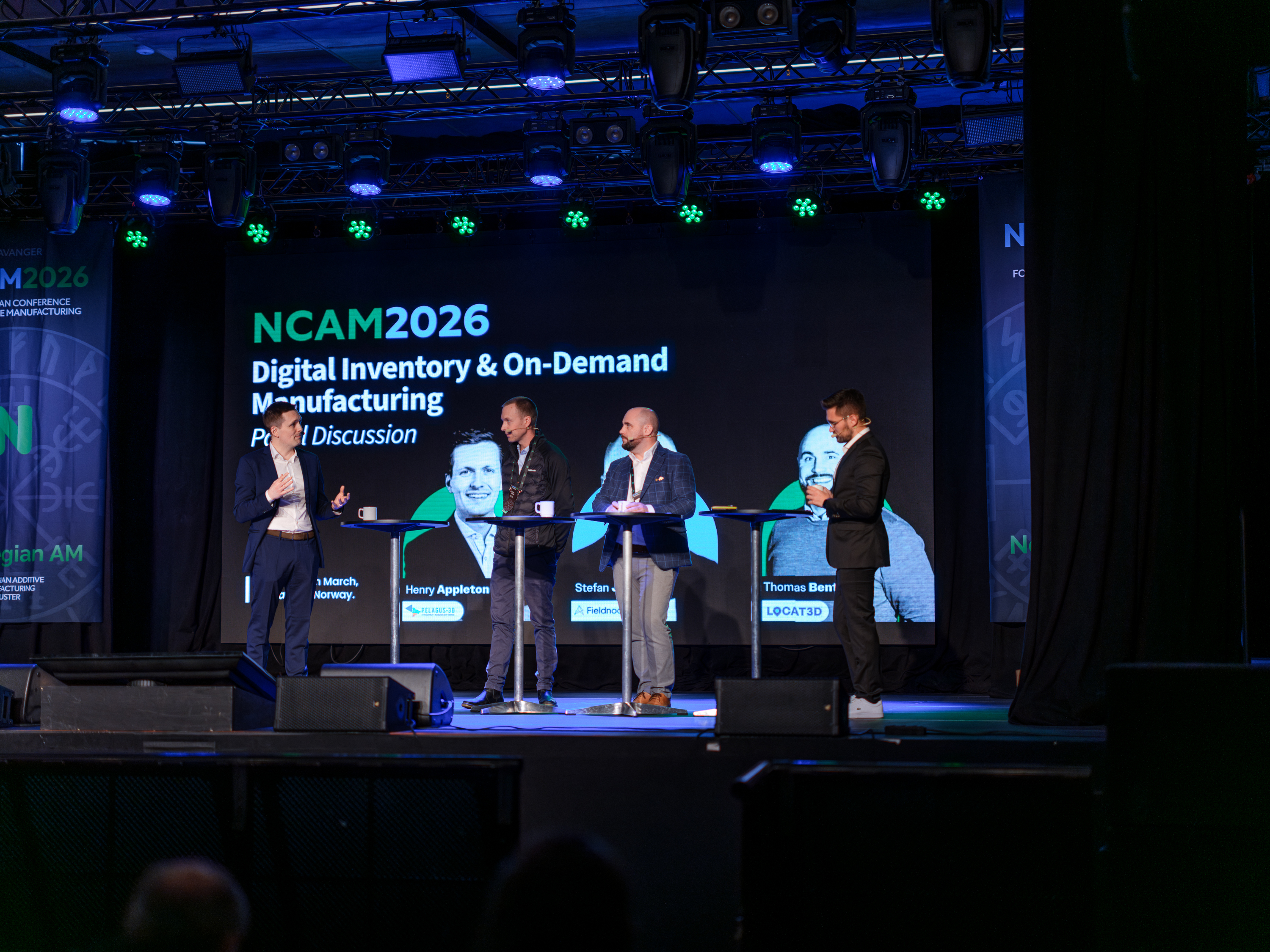
NCAM 2026 brought together operators, technology providers, and parts of the supply chain to discuss the role of additive manufacturing in industrial environments.
What stood out was not just the content of the discussions, but the composition of the room. There were strong contributions from operators such as Equinor, Aker BP, and Vår Energi, certification bodies, including DNV, as well as a number of local technology companies.
OEM participation was more limited in this year’s discussions. As additive manufacturing progresses toward scaling, their perspective becomes increasingly relevant. OEMs define design authority, quality standards, and long-term responsibility for parts, making their involvement important in shaping how these models are implemented.
Operators are actively reassessing how they manage spare parts. Data shared during the event reinforced a consistent issue: a large proportion of inventory is never used, while significant capital remains tied up in stock. At the same time, when parts are needed, availability is not guaranteed. This imbalance is driving interest in alternative supply models.
The concept of replacing physical inventory with digital availability, supported by on-demand manufacturing, is gaining traction. In this context, additive manufacturing is not positioned as innovation. It is being considered as a practical response to a supply chain constraint.
Examples shared during the event, including Deutsche Bahn, which has set a target that around 10% of its spare parts portfolio could be produced via additive manufacturing on demand, indicate that this shift is already underway in adjacent industries.
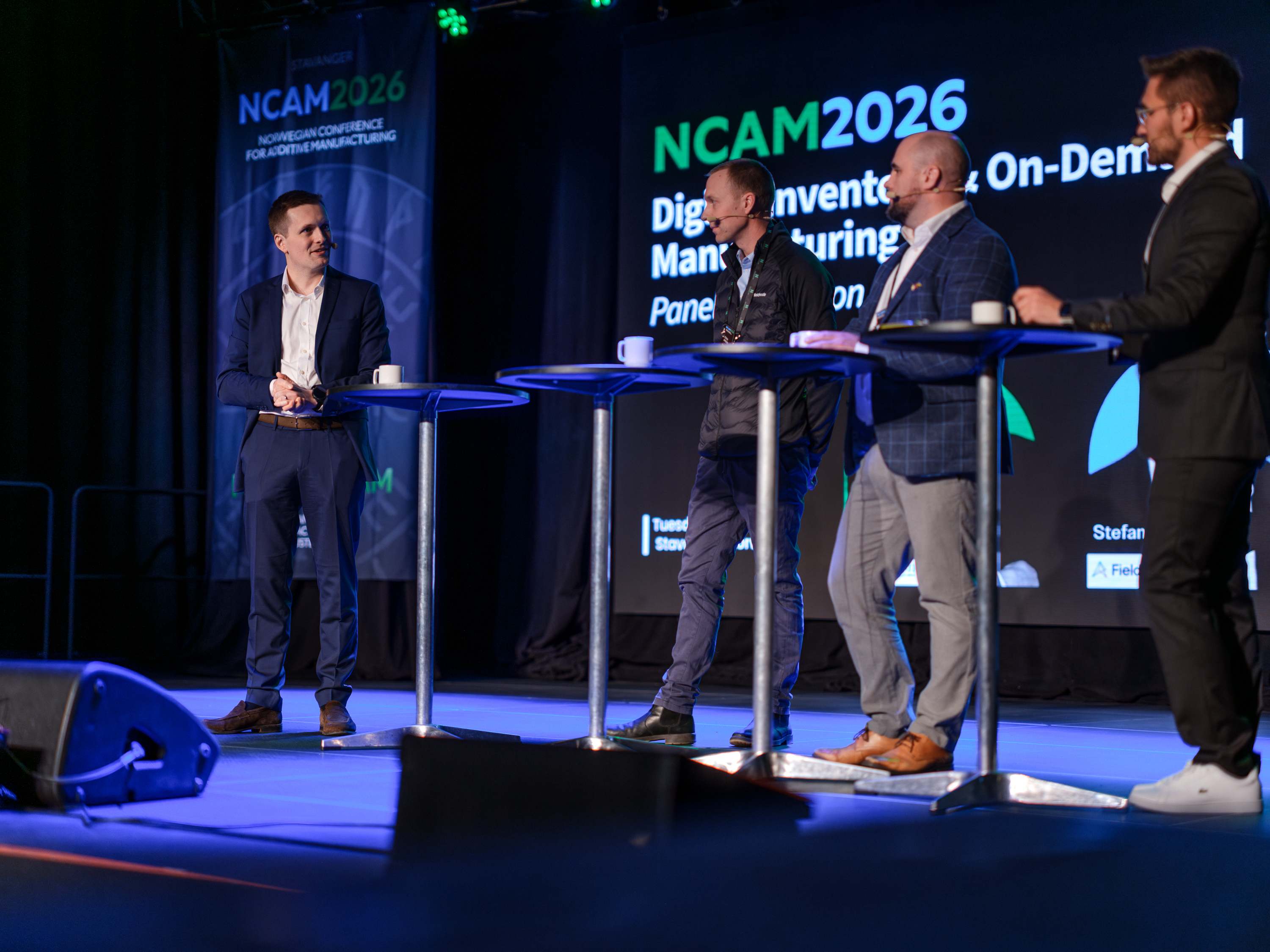
Photo Credit: Steinbru Photography
Moving from concept to implementation
Qualification was a consistent focus across sessions. The challenge is not producing a part, but demonstrating that it can be produced repeatedly, to the same standard, across different environments.
Frameworks such as ST-B203 are evolving to address this, with increased focus on part families and clearer validation logic. This is a positive step, although applying these standards consistently across operations remains a detailed and ongoing effort.
How solutions are structured
Many discussions at NCAM focused on projects, pilots, and collaborative initiatives. These play an important role in developing capability and building confidence.
Operators also highlighted the importance of translating these initiatives into operational models that align with existing supply chain requirements. This includes clear business cases, defined processes, and the ability to apply solutions across multiple assets.
The transition from demonstration to deployment is therefore a key area of focus.
The role of the operator is also evolving. In several discussions, it was clear that operators are taking a more active role in shaping how supply should work. This includes reassessing whether holding large volumes of spare parts remains the most effective approach, and exploring models where availability is delivered more flexibly.
At the same time, there are clear boundaries. Certain components will always require physical stock. Not all parts are suitable for additive manufacturing. And in many cases, the risk associated with change must be carefully managed.This reinforces that additive manufacturing will not replace existing systems. It will complement them, where it provides a clear advantage.
This is where the role of the OEM becomes central. As operators begin to request alternative supply models, OEMs are increasingly expected to respond by ensuring that any new approach maintains the standards required for quality, safety, and compliance.
Additive manufacturing, in this context, needs to operate within OEM-controlled frameworks.
This includes:
- Defined design authority
- Validated manufacturing processes
- Controlled handling of intellectual property
- Alignment with existing qualification standards
These elements are essential for moving from individual use cases to broader adoption.
Intellectual property as a key part of this transition
As additive manufacturing becomes more widely used, the focus extends from physical parts to digital definitions. CAD files, specifications, and process parameters form the basis of production. This increases the importance of managing how these assets are accessed, shared, and used.
Discussions during the IP session highlighted both the opportunities and the responsibilities associated with digital manufacturing. Regulatory frameworks are evolving, particularly in Europe, to reflect this shift.
For OEMs, this reinforces the need for secure, traceable systems that maintain control over how parts are produced.
How trust is established
Collaborative approaches, particularly within the Nordic ecosystem, have supported early development and knowledge sharing.
As additive manufacturing moves into operational environments, trust increasingly needs to be supported by systems. This includes certification, documented processes, and repeatable outcomes. It must be possible to verify how a part was produced and that it meets the required standard. This is a practical requirement for industrial adoption.
NCAM 2026 reflects an industry that is progressing and aligning around the requirements for scale. Additive manufacturing is being applied in operational contexts. It is supported by certification bodies and explored across a growing range of use cases.
The focus now is on how these capabilities are integrated into supply chains in a consistent and controlled way. This is where additive manufacturing moves from capability to dependable supply.
Insights | 4 April 2026
Related Articles
The Consequences of Utilizing Gray Market Parts in Maritime and Energy Operations
The Role of Additive Manufacturing in Maritime and Energy Parts